
What It Takes to Shoot a Documentary Solo
How do you ask your recently diagnosed friend if you can document her cancer journey?
It was the elephant in the room and the balloon that had to be popped for this to happen. We were both fully aware that this was a journey into the unknown.
[Spoiler alert: Helene is thriving and living her best life.]
From the beginning, this documentary was always going to serve one of two roles: it was either going to become a film to support and uplift others navigating cancer, or a private keepsake for Helene Barron’s family if things turned dark. Either way, we both agreed: it had to be real.
Directing Vérité: No Lighting, No Retakes
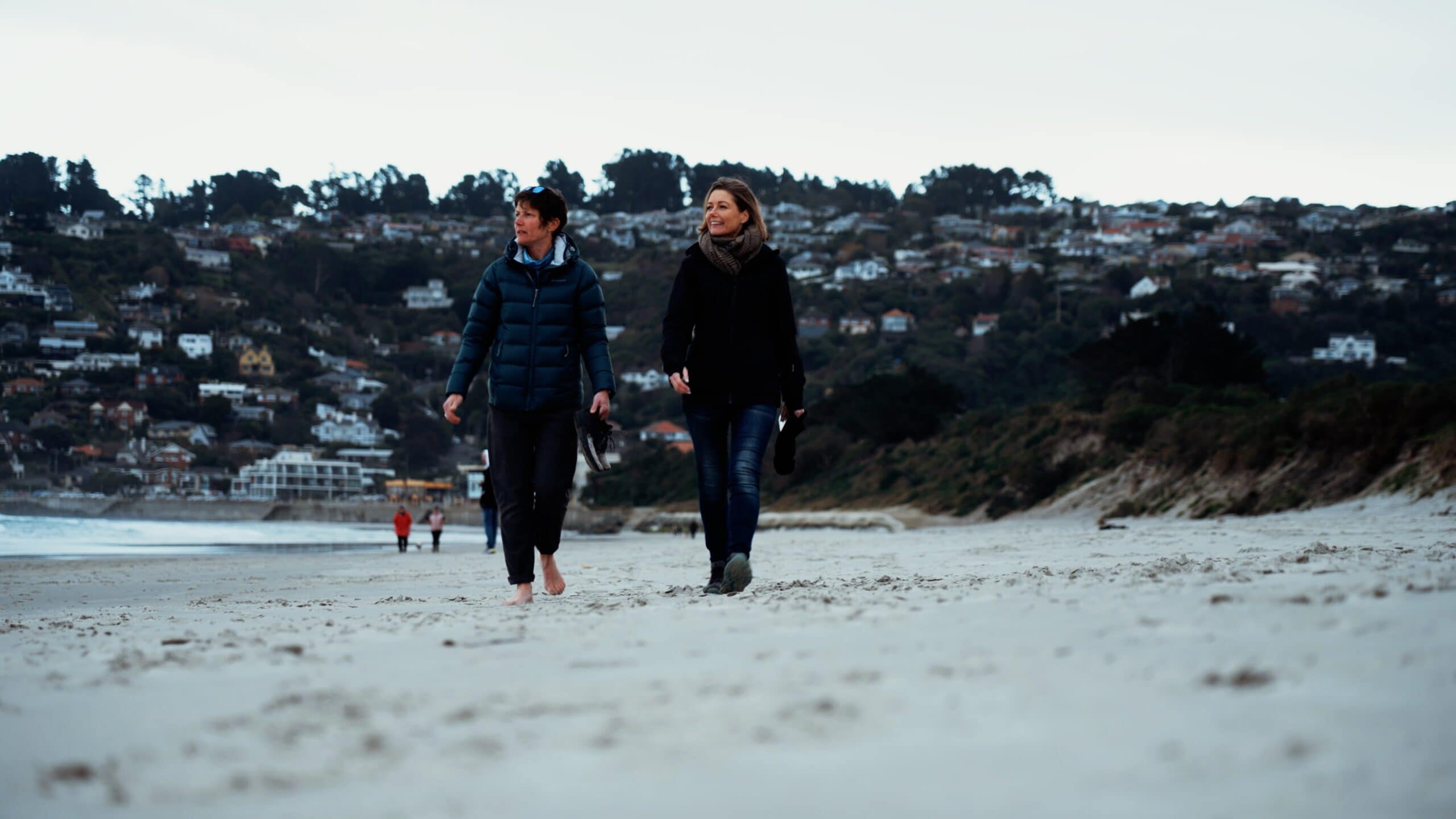
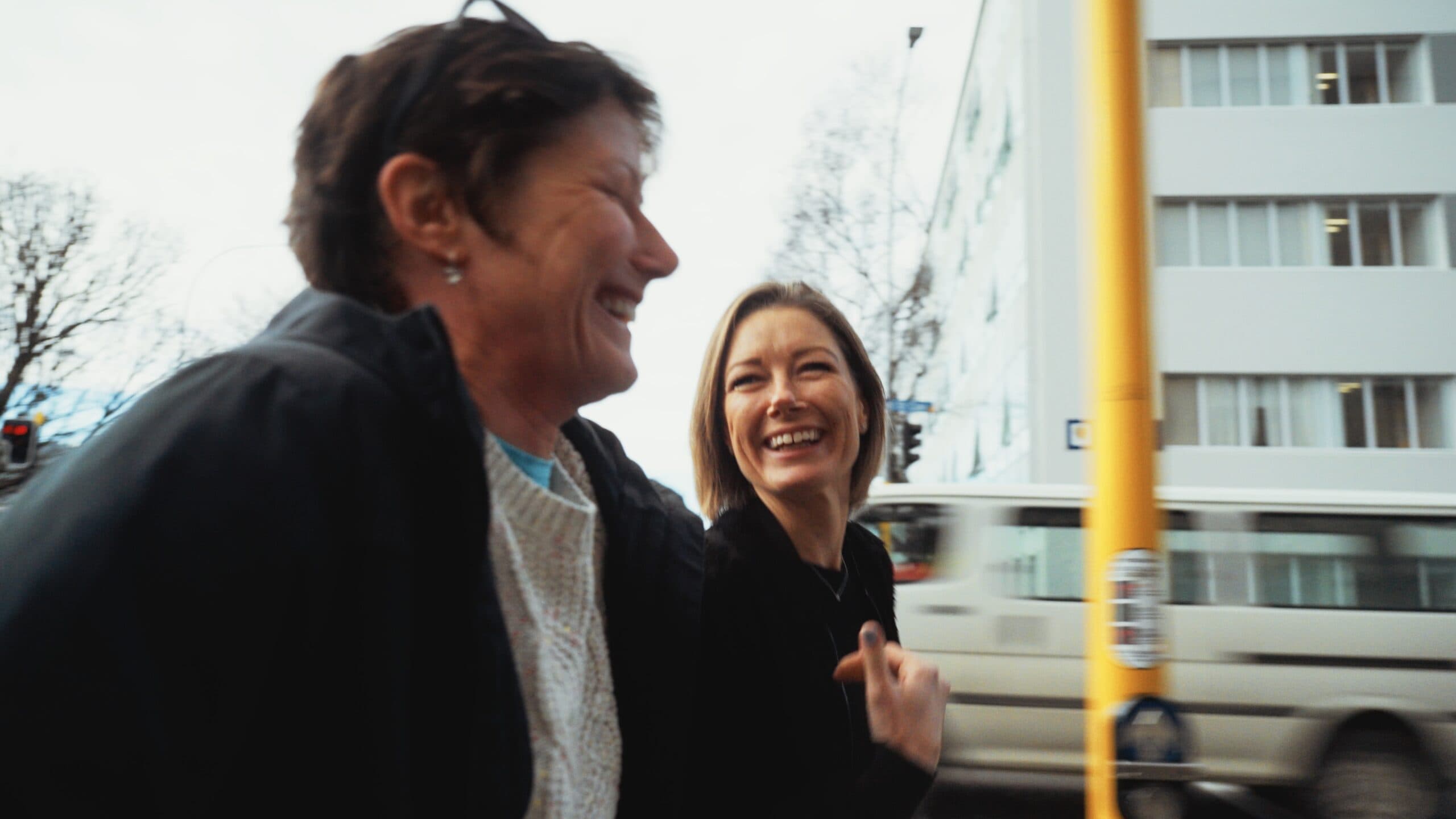
During production, we’d find ourselves across medical areas to public places – there was no opportunity to call a break in the schedule and set up lighting, control sound or do a retake. What happened, happened.
That’s where verité filmmaking comes in – capturing life as it happens. It’s raw and that’s exactly what this documentary is.
I shot solo, often with just a camera and a wireless mic. I brought a tripod, but rarely used it. Most of this film was captured handheld, in whatever moment we found ourselves.
How Do You Film Respectfully Inside a Working Hospital?
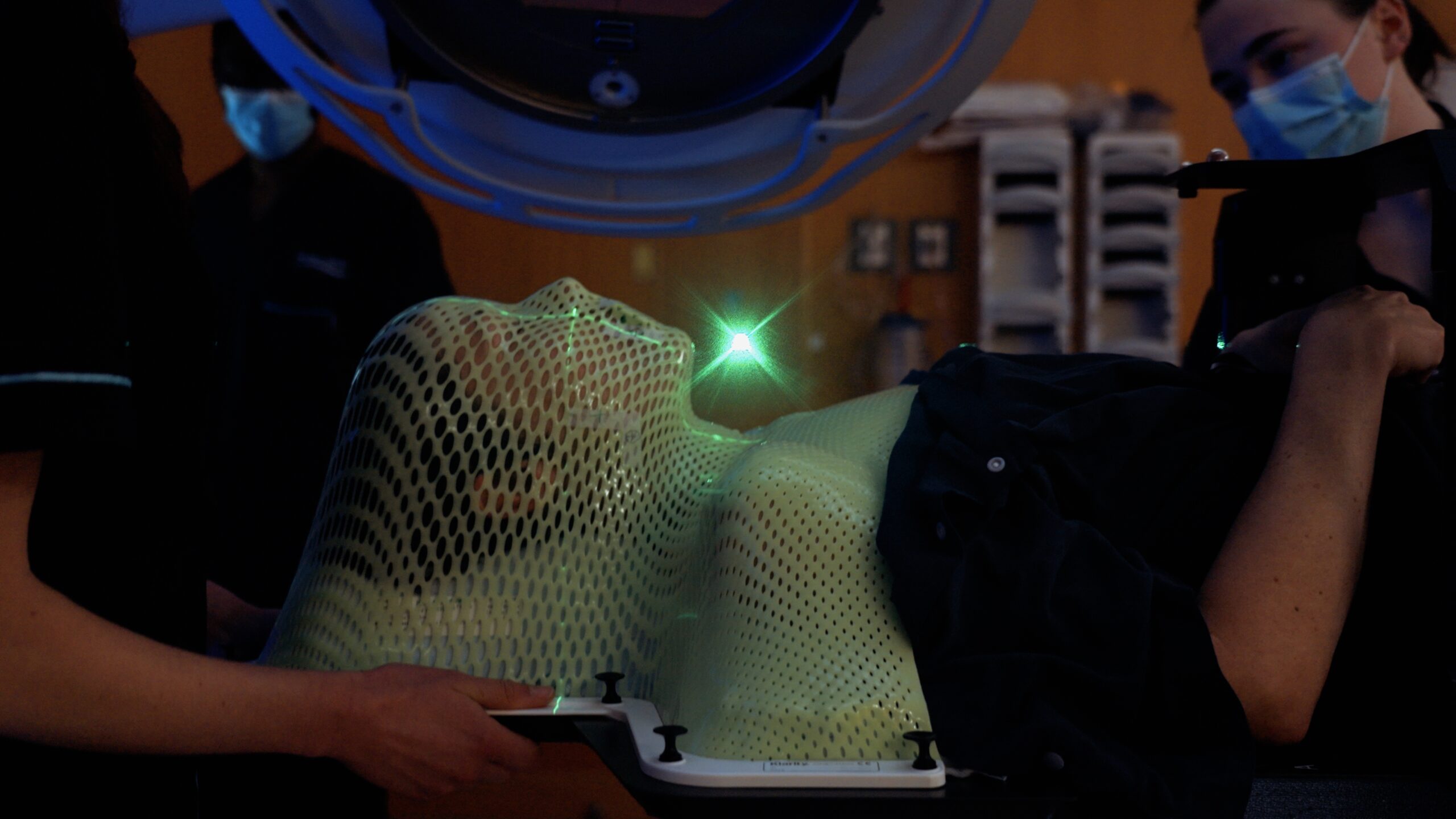
I’ve been told that one scene that resonated most with audiences shows Helene during radiation treatment. Her eyelashes are just visible through the green mesh mask that bolts her head to the table.
She’s trapped there, in that moment, in every sense.
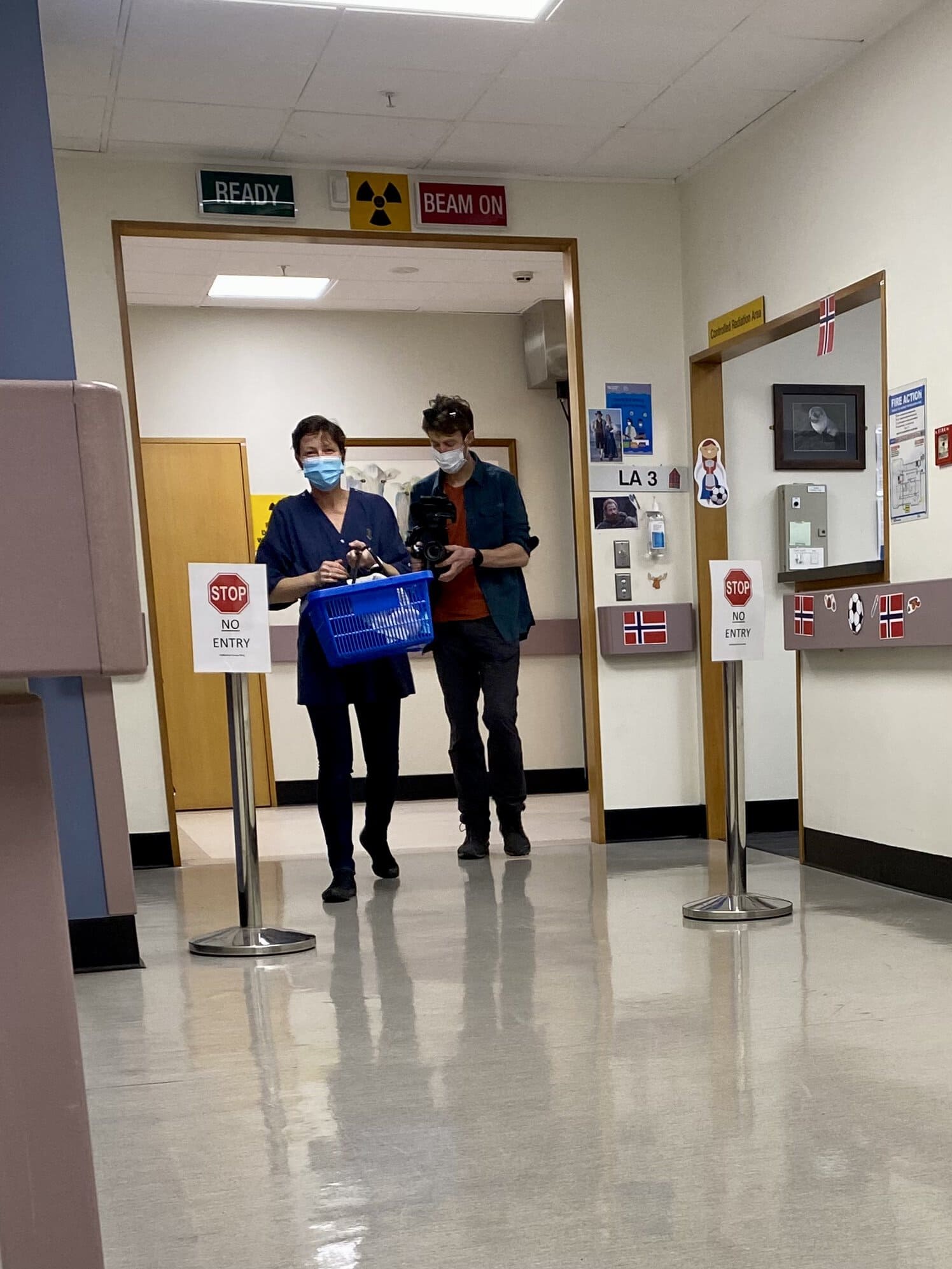
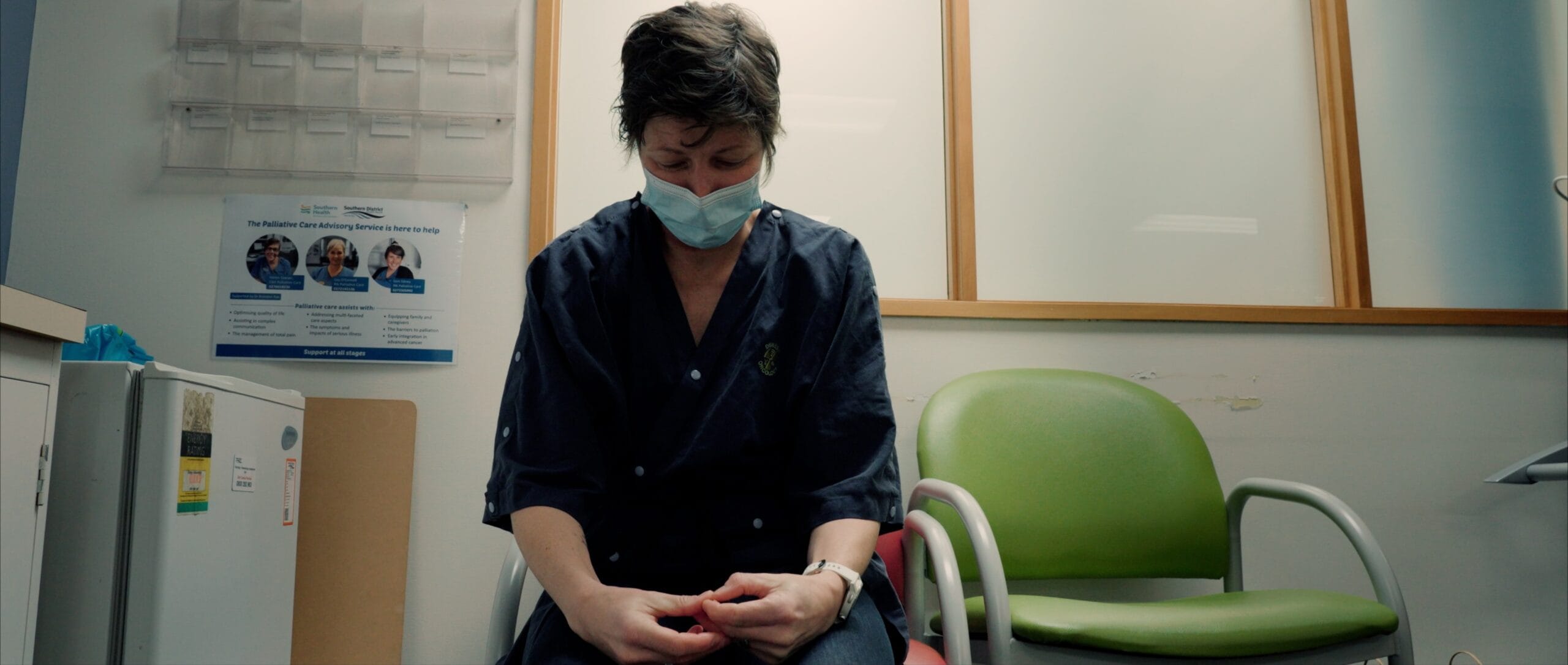
Getting the green light to film inside this treatment room was a huge deal. While the staff were open to being filmed, I was still operating inside a working hospital – a space filled with real people facing very personal moments.
Filming any documentary takes care, but this environment demanded extra sensitivity – and rightly so.
Q&A – What have people asked me the most?
- When you were filming together, how did you stay focused on the story and not get emotionally involved?
- Being totally transparent, I couldn’t, not always. There were times when I’d be having a conversation from behind the camera and Helene would break down. While I often ‘let the moment breathe’ on screen, I think that my ability to deeply connect with people and for them to open up with me means that I need to be open to connecting back.
- What gear do you need to shoot a documentary solo?
- Filming in-the-moment like this is a double edged sword. You need not focus on artificial lighting setups, scripts, shot-lists (to an extent), or re-takes. The other side to this is that you have no clue what will happen, you’re switched on, constantly for whatever is about to happen. Always thinking about story, where’s the natural light coming from, how’s the audio quality right now, do I need to go ahead of the characters to get some different angles…but without missing anything. You remain as light and agile as humanly possible. My weapon of choice in this instance was a Sony FX6 and a zoom lens (28-70 or 16-35 to cover the bases initially). I had Helene mic’d up the whole day (Rode Wireless Mics) and would make mental notes, or roll the camera on any interesting sound-bites to remind myself later on that something was said.
- How do you film inside a hospital?
- Expanding on what I’ve written above. The short answer, you’ve gotta ask…and I don’t mean ask for forgiveness – you need ask first. Which, when the plans change and you’re 5-minutes from walking into a hospital with Helene, you need to build a rapport, mitigate any concerns and be very very flexible.
- What does vérité actually mean in practice?
The full term is Cinéma Vérité. Vérité is French for ‘truth’, so it’s ‘Truthful Cinema’. Filming in the moment. I liked how this term summed up Helene’s film because it reflected the realism of her situation. Helene didn’t have any second-takes, no ‘press-pause’ – it was real for her, so that’s how I wanted to people to experience it when they watched it.
From Doc Edge to Cancer Society Fundraisers
We always intended this film to reach people who needed it. Onwards premiered at the Oscar-qualifying Doc Edge Film Festival around New Zealand in 2025, before being screened to support the New Zealand Cancer Society in their fundraising and awareness campaigns.
You can read more about Helene, her journey and the film project from the Otago Daily Times, WanakaApp and ..and through Paralympics NZ, where Helene works as a high performance physiotherapist.
You can also watch Onwards on YouTube.

Ben Wallbank is a documentary director and cinematographer based in Wānaka, New Zealand, whose film Onwards premiered at the Oscar-qualifying Doc Edge Film Festival in 2025.
If you have a film project, let’s chat – get in touch with me over on the CONTACT PAGE.